The Ultimate Guide to Exhibitor Lead Capture and Lead Retrieval
Ask exhibitors what makes a trade show worth the booth fee, and most name one number: the good leads they walked away with. That number decides whether they rebook next year.
Event lead capture, also called lead retrieval, is how exhibitors collect and qualify those leads at the booth. It’s also how you, the organizer, prove your show delivered. If exhibitors still rely on business cards and paper forms, you’re leaving revenue and goodwill on the floor.
This guide is for organizers running trade shows and conferences for associations, corporations, or agency clients. It covers what lead retrieval is, how it works, what it costs, and how to resell it. You’ll also learn how to help exhibitors prove return on investment (ROI) and handle data under the General Data Protection Regulation (GDPR).
What Is Event Lead Capture (Lead Retrieval)?
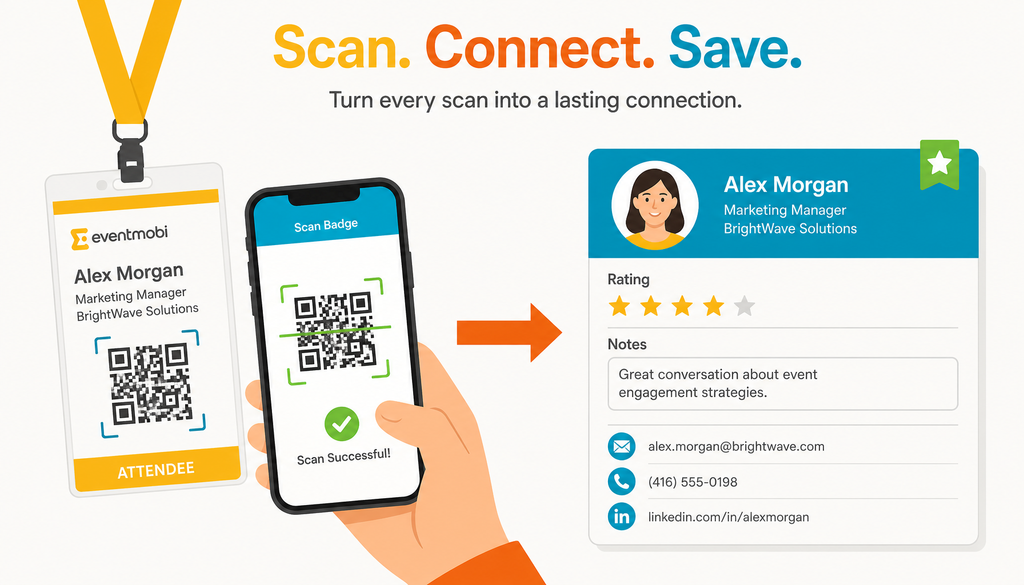
Event lead capture is the process of collecting and qualifying booth visitors’ contact details at an in-person event. Lead retrieval is the same process, usually done by scanning the Quick Response (QR) code on each attendee’s badge.
A lead is a booth visitor who agreed to share their details, plus the ratings and notes staff add. The goal is a clean, exportable list instead of a shoebox of business cards.
Business cards get lost, handwriting gets misread, and nobody wants to type 300 cards into a spreadsheet. A dedicated system replaces that with three actions: scan, qualify, and save. After the show, exhibitors export a CSV file for import into a customer relationship management (CRM) system.
Three related terms often get mixed up:
- Lead capture is the on-site act of collecting and qualifying booth visitors during the event.
- Event lead retrieval describes the same activity from the exhibitor’s side and often names the scanning service organizers sell.
- Lead generation is the broader marketing work of attracting interest and capturing intent from potential buyers.
What Is a Lead Retrieval Device?
A lead retrieval device is any hardware exhibitors use to scan attendee badges and store leads. Traditionally, that meant a handheld scanner rented for each booth. Today, it’s usually the smartphone or tablet booth staff already carry, running a lead retrieval app.
How Does Lead Capture Work at a Trade Show Booth?
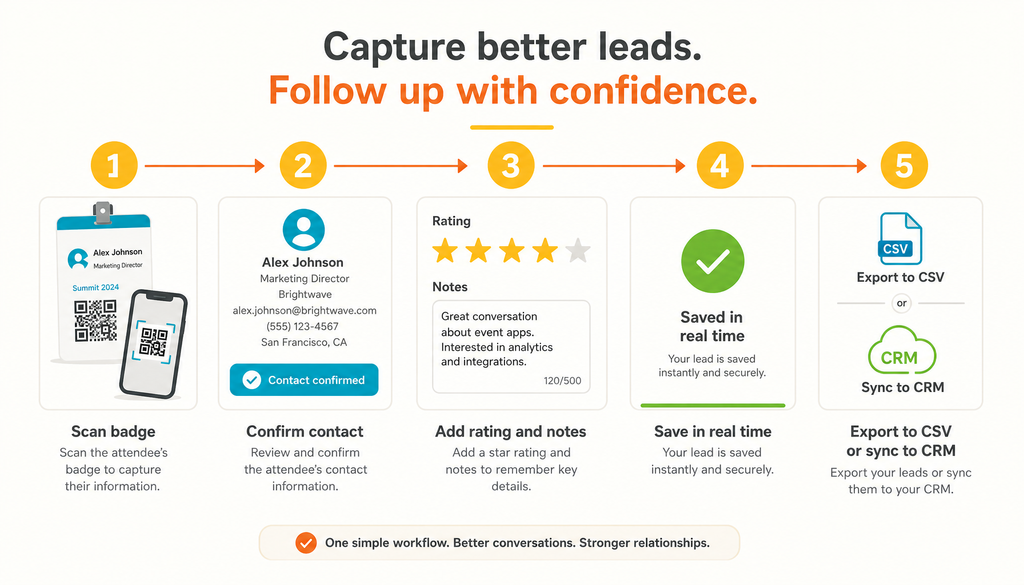
Trade show lead capture turns a printed or digital badge into a qualified lead record in seconds. A booth rep scans the badge, the attendee’s registration details appear, and the rep adds qualifying information before saving.
Walk exhibitors through these eight steps:
- Open the lead capture app on a phone or tablet and log in
- Scan the attendee’s badge or QR code, or enter details manually if needed
- Confirm the contact information that appears on screen
- Add a star rating to flag how hot the lead is
- Answer the qualifying questions the company set up before the show
- Type quick notes while the conversation is fresh, using device keyboard dictation to speed things up
- Save the lead so it syncs to the company’s lead list
- After the event, export the full list as a CSV file for import into a CRM
Steps four through six create most of the value. Ratings, notes, and questions about budget, timeline, or product interest tell a sales team which of 400 scans deserve a call on Monday.
What Happens When a Badge Scan Fails?
Scans fail for predictable reasons: a bent or wet badge, a smudged print, or glare on a phone showing a digital badge. Train booth staff to switch to manual entry right away, then add the rating and notes as usual.
Connectivity is the other weak point in trade show lead retrieval. EventMobi’s Lead Capture App has no offline mode, so it needs Wi-Fi or cellular data to save and sync scans. Confirm coverage across the exhibit hall, and use this guide to print clear QR codes for event badges.
What Types of Lead Retrieval Tools Are There?
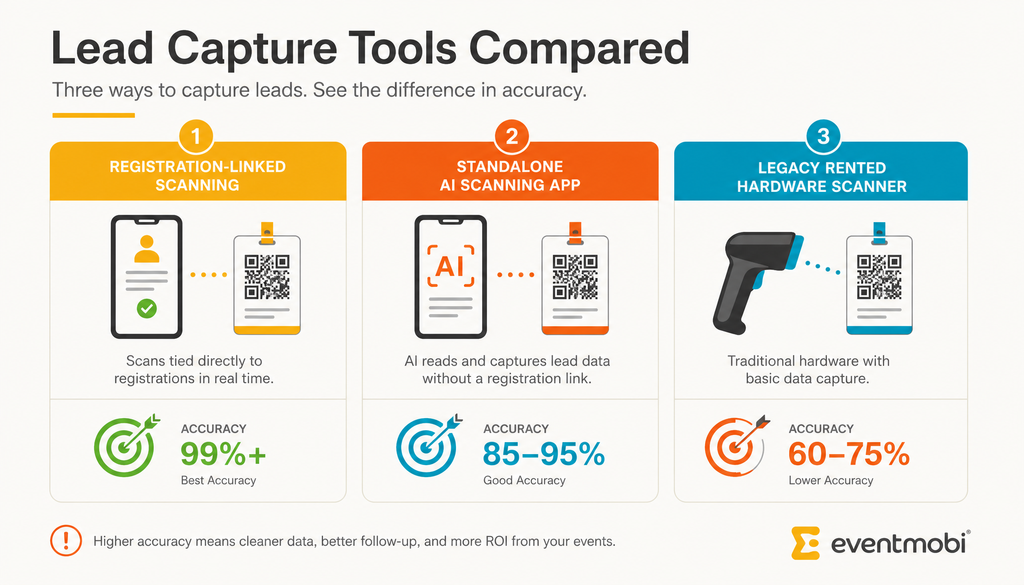
Lead retrieval for trade shows falls into three categories. The difference is where the attendee data comes from, which decides how accurate and permissioned each lead is.
1. Registration-Linked Scanning
The scanner reads a QR code tied to the attendee’s actual registration record. Details come straight from what the attendee submitted, so nothing is guessed. When one platform runs event registration and badge printing and check-in, data stays consistent from sign-up to the booth.
2. Third-Party Badge Scanner Apps
Some exhibitors bring their own event badge scanner instead of the official tool. A typical badge scanner app uses optical character recognition (OCR) to read a name and company from the badge. It then runs that through an outside data-augmentation tool to guess email, phone, and job title.
A trade show badge scanner like this is cheap or free upfront. The data is often incomplete, stale, or a personal email address. It’s also collected outside any agreement the attendee made with you.
3. Rented Lead Retrieval Devices
Dedicated handheld scanners are accurate, but exhibitors rent them for each booth and return them after the show. Hardware programs often deliver lead reports only after the event, when it’s too late to act during the show.
Registration-linked scanning is usually the strongest option. It pairs hardware accuracy with app speed and self-serve access, without guesswork or a consent gap.
Why Does Lead Capture Matter for Sponsorship Revenue?
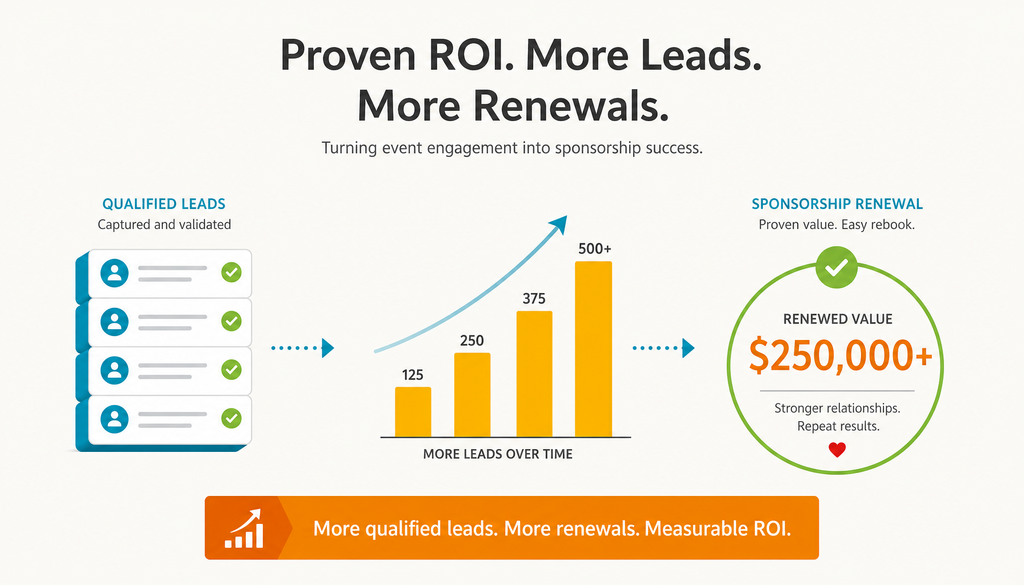
Exhibitors decide whether to rebook based on the trade show leads they bring home. When you can hand them clear lead data, renewal conversations rest on evidence, not gut feel.
Exhibitors vote with their budgets. Strong lead numbers make next year’s booth an easy approval, while weak data invites them to shop around.
Lead data also gives your sales team proof when selling floor space and event sponsorship packages. Be clear about its financial role: lead capture mainly protects sponsorship revenue you already have. Resale margin is a secondary benefit.
Roll access into your sponsorship levels and tiers as a perk, and it becomes one more reason to renew. That protection depends on one condition. Exhibitors need a reason to use your official tool instead of a scanning app they bring themselves.
Registration-linked capture gives them that reason: verified registration details and engagement data a generic scanner can’t reach. For more package ideas, browse these event sponsorship ideas.
How Much Does Lead Retrieval Cost?
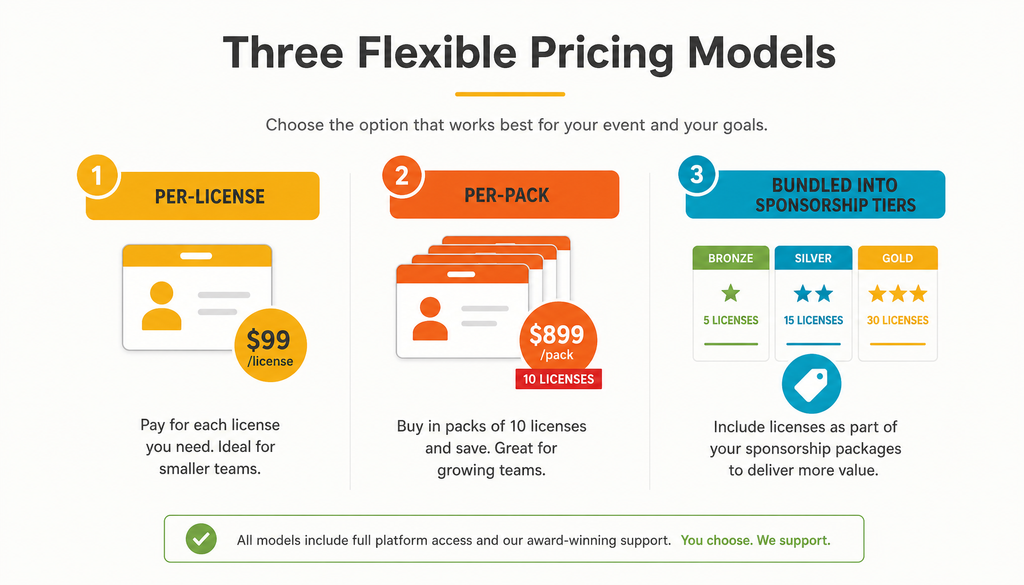
Lead retrieval pricing usually follows one of three models. Compare them on total cost per exhibiting company, since a low sticker price can hide per-user fees.
- Per-license: a fee for each user or device, so costs rise with every booth rep added
- Per-pack: licenses bought in bundles, which simplifies budgeting for shows with many exhibitors
- Bundled: access included in sponsorship or exhibitor tiers, with the cost folded into package pricing
A per-user or per-lead fee can cost more than a flat per-company license, especially for exhibitors who staff a busy booth with several reps.
EventMobi Lead Capture uses per-company licensing, sold in packs of 10 company licenses at $50 per license, or $500 per pack. One license covers unlimited booth staff for that company. The app runs on the iOS and Android phones and tablets exhibitors already own, so there’s no hardware to rent.
How Do Organizers Price and Resell Lead Capture to Exhibitors?
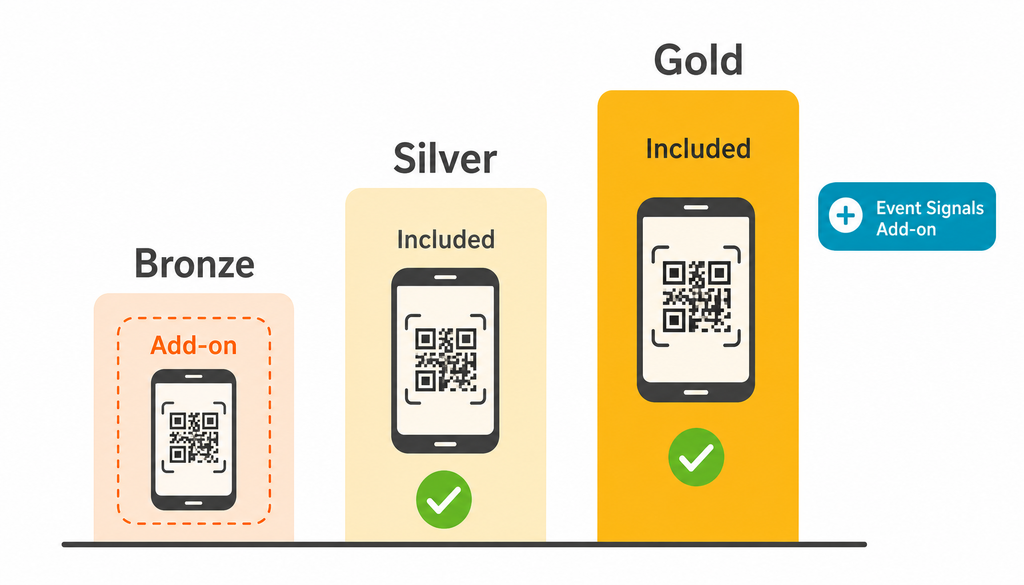
Organizers typically buy licenses at cost and resell lead capture inside sponsorship packages at a markup. Your margin is the gap between what a company license costs you and what an exhibitor will pay for provable results.
A low per-company cost leaves room to mark up access several times. Many exhibitors already treat lead data as a cost of doing business. How you package it matters as much as the price, and these four approaches work well:
- Include scanning access in mid and top sponsorship tiers, and offer it as a paid add-on for lower tiers
- Tier packages by the number of company licenses or booth reps included, rather than by feature access
- Position the richer, consent-backed data your official tool exports as the reason it beats a standalone scanning app
- Price it high and give it away in top-tier packages when premium-tier urgency matters more than line-item revenue
Exhibitors used to renting hardware often see a bundled, self-serve option as an upgrade. Plan onboarding early: offer training, or ask EventMobi’s team for onboarding support.
You can also add value beyond contact details. EventMobi’s Event Signals turns session attendance, engagement, and survey responses into buying-intent cohorts. You can add those cohorts to exhibitor exports or sell them as a paid add-on.
Turn lead capture into sponsorship revenue. The EventMobi Lead Capture App slots into every tier, from booth exhibitor to title sponsor. Book a Demo to see how you can integrate it into your packages.
How Can Organizers Help Exhibitors Prove ROI After the Show?
Give exhibitors qualified lead data fast, plus a clear report they can take to their own leadership. Exhibitor ROI gets decided in the weeks after the show, when sales teams either follow up or let the list go cold.
Qualification Data Beats Raw Scan Counts
A scan count tells an exhibitor how busy the booth was. Qualification data tells them what the booth was worth. Encourage exhibitors to build custom qualifying questions before the show and to rate and annotate every lead.
Good trade show lead management starts at the booth. A rated lead with notes on budget and timeline is ready for sales, while an unrated name sinks.
Speed Up Trade Show Follow Up
Speed matters in trade show follow up, because booth conversations fade once attendees return to their inboxes. [STAT NEEDED: response-rate difference between follow-up within 48 hours and follow-up after one week]
Self-serve exports make same-day outreach possible, because exhibitors download their own CSV instead of waiting on you to send files.
Integrating Lead Retrieval with a CRM
Most sales teams work from a CRM, so leads need to land there quickly. The dependable path is a CSV export for import into the exhibitor’s CRM, with fields mapped once and reused at every show.
If your organization connects event data to other systems, review EventMobi’s event technology stack integration services.
Share a Post-Show Lead Report
The strongest renewal proof is a short report you send each exhibitor after the show. Include total leads captured, how many staff rated as high priority, and a summary of qualifying answers. Send it before renewal season, so the conversation starts from results.
EventMobi Lead Capture supports this with star ratings, notes, and custom qualifying questions. Its self-serve company portal lets exhibitors export their own leads as CSV at any time.
Is Event Lead Capture GDPR-Compliant?
Event lead capture can support compliance with the General Data Protection Regulation (GDPR), depending on how you handle consent, data scope, and access. Compliance comes from your policies and agreements as much as from the tool you choose.
The GDPR can apply to organizers outside Europe when they process personal data of attendees in the European Union. This section offers general guidance, and your legal team should confirm what applies to your events.
Four practices make lead retrieval easier to defend:
- Consent and transparency: Tell attendees at registration that a badge scan shares their details with that exhibitor.
- Data minimization: Article 5 of the GDPR makes this a core principle, so share only the fields exhibitors need for follow-up.
- Exhibitor access controls: Make sure each exhibitor sees only their own scans, never a competitor’s leads.
- Registration-linked data: Share details attendees submitted to you, under terms they agreed to.
That last point is why registration-linked capture is more defensible than third-party enrichment. Enrichment apps rebuild contact details from outside sources, often without the attendee’s knowledge. That gap makes GDPR-compliant lead retrieval much harder to demonstrate if anyone challenges it.
EventMobi Lead Capture is registration-linked, and each exhibitor sees only their own leads. Review EventMobi’s platform security and data protection practices, then confirm your data processing agreements with exhibitors.
What Should Organizers Look for in a Lead Capture App?
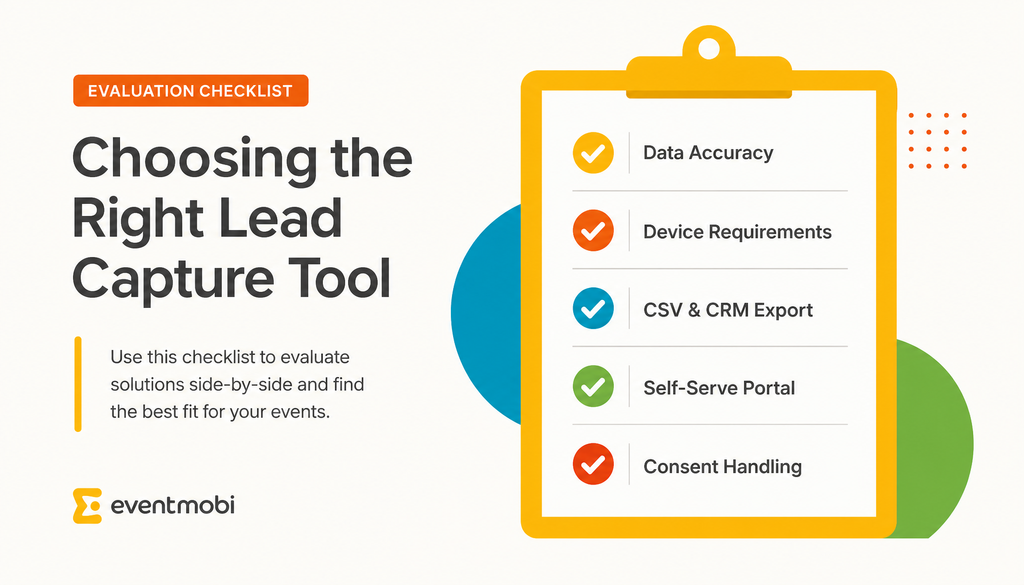
The right lead capture app pulls verified registration data, runs on everyday devices, and lets exhibitors serve themselves. Use these criteria when comparing any lead retrieval app:
- Data source: verified registration records instead of guessed or enriched contact details
- Device requirements: support for the iOS and Android phones and tablets booth staff already carry
- Qualification tools: star ratings, notes, custom qualifying questions, and manual entry for failed scans
- Export options: clean CSV files exhibitors can import into a CRM
- Self-serve access: a portal where exhibitors manage staff and export leads without your help
- Connectivity needs: clear internet requirements, so you can plan venue coverage
- Data handling: access controls that limit each exhibitor to their own scans
- Onboarding support: walkthroughs or training so exhibitors arrive ready to scan
What makes the best lead retrieval app for small exhibitors? With one or two booth staff, they need a tool that runs on a personal phone and takes minutes to learn.
Frequently Asked Questions
Final Thoughts
Exhibitors rebook when they can prove the show paid off. Treat event lead capture as core show infrastructure, and roll it into sponsorship packages as a renewal-protecting perk. Choose a tool that gives exhibitors richer, consent-backed data than any app they could bring themselves.
Then go beyond the scan. Pair badge leads with session attendance and survey data so every exhibitor leaves with buying-intent insights only the organizer can deliver.

Unofficial badge scanners are already on your show floor. Your attendee data walks out with them, and so does your lead capture revenue. Watch the EventMobi Events Masterclass: Inside Job on-demand to see how organizers are taking that control back.
