What B2B Events Can Learn from Experiential Marketing
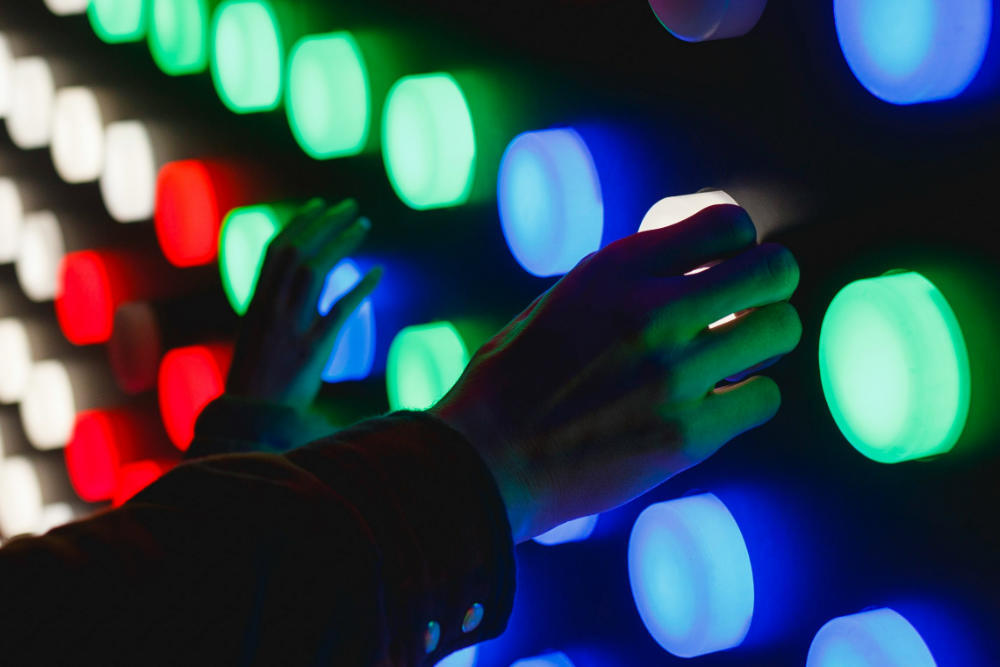
Between the flashy brand showcases and the eye-popping Times Square displays, B2C brand activations can teach B2B events a lot.
Recently, a giant arcade machine showed up in the middle of Times Square. But there wasn’t a pixel in sight.
Instead, two literal fighters battled inside the machine, kicking and throwing uppercuts. Outside the machine, movie stars attempted to control the action. And yes, people noticed.
The stunt drew a ton of attention on social media and elsewhere, and presumably got a couple of event planners wondering, “How the heck did they do that?”
The larger-than-life *Street Fighter* activation was designed to promote a big-budget movie, but there’s plenty business-to-business (B2B) event organizers can take from it. After all, creating memorable experiences isn’t just for consumer brands.
And there’s a business case for it, too. Research from the experiential marketing agency Spiro found that attendees were up to three times more likely to make a purchase following a high-quality experiential event.
“I think the biggest thing is people want to feel special, and that you took some time, and you paid a little bit of attention,” says Trish Knox, the founder of TK Events, a UK and Canada-based event production firm.
If you find yourself attending a big gathering like Event Tech Live or IBTM World, odds are you’re looking for ways to bring that kind of spark to your next conference. Turns out, it’s not as hard as it seems.
What Makes an Event “Experiential”?
Think less sitting through presentations, more stepping into an experience. Experiential events are designed to make people feel something, whether that’s excitement, curiosity, surprise, or a little FOMO.
An immersive experience gives attendees something to interact with, talk about, and remember long after the event wraps up. And when everyone has a camera in their pocket, a clever experience can quickly become a social media moment, too.
Experiential marketing doesn’t just offer an opportunity to go viral; it can be driven by viral trends. Just be sure you dive into the market research first.
Case in point: Last year, an Event Tech Live survey found that 49.2% of respondents were drawn to AI technologies, while the older “metaverse” trend had lost steam. A data point like that might just prevent you from putting big bucks into an outdated trend.
Knox got her start in advertising and spent time as an event manager with Apple during the early ’90s. She’s been around long enough to have a broad perspective on what we call experiential, or “immersive,” event design.
Over the years, TK Events has put together events such as Michelin awards ceremonies where nominated chefs were invited to cook directly in the venue. (It was harder than it looked.) And they’ve helped build clever booth integrations, along with numerous events over the firm’s history.
Firms like Knox’s have been at this for a while. So why is it trendy now? In part, she says, because of a desire to build events that take advantage of the spaces where they exist.
“I think we’re really tailoring the experience and the feeling we want an audience to leave with,” she says. “And that’s where the experiential has kind of surfaced into more of a conversation.”
At a time when IBTM World is highlighting a $6.2 trillion “brain economy,” one way that events can show that brainpower in action is with a lot of creativity.
In its own way, experiential marketing shows just how much thought and effort you’ve put into your event, and that translates whether your audience is B2B or B2C.
Every month, The Mixer looks at what event planners can borrow from other industries, and what they should leave behind.
Subscribe to get the next issue in your inbox.
Translating Brand Activations to Events
Knox, over the years, has had the chance to work on both B2B events and B2C brand activations. One recent standout experience involved the opening of the Porsche Experience Centre Toronto, a one-of-a-kind event that TK Events started planning for before the building was even complete. Knox’s team saw an opportunity to highlight the place just as much as the vehicles on the track.
“The building, the actual structure, the Experience Centre itself, it needed to have its moment in the spotlight,” she says. “It’s about the cars for sure, but the building’s been years in the making.”
With that in mind, the team used projection mapping to integrate the building with the cars, creating an engaging visual display for the attendees sitting in the bleachers.
“It’s all about the Porsche cars, but their attention was then drawn back and forth to the building with the projection mapping, telling the story of the building and the history of Porsche cars,” she says.
The approach, while engaging, required a lot of problem-solving because, again, the building wasn’t ready during the design process. But by working closely with the client, it led to a captivating result.
“I think when we get approached by clients, it’s always the creativity that’s driving the conversation,” she says.
Experiential Marketing: Doing a Lot with a Little
Something that flashy might sound out of the range of your B2B event’s budget. But making a splash doesn’t have to be extreme, just different. (“A large budget is going to have its own challenges, too,” she notes.)
Brands scale down their ambitions, too. A recent trend is the “brand gazette,” a custom print publication that might show up at a festival or marketing event.
They’re not just ads; they’re full newspapers, complete with editorial articles. And in some cases, they offer a sharp contrast to the brand’s public image: Amazon, a notably digital company, did one for Cannes Lions earlier this year, as part of a more deeply integrated experience.
Knox says that such throwback strategies speak to a desire for more simplicity, especially for young adults who grew up in the digital-centric days of the pandemic. “I think there’s a tendency to maybe romanticize earlier eras, and now you’re seeing all of that creep in,” she says.
This kind of simplicity also works for booths, too. Knox points to an initiative her firm created for a vendor in the environmental, health, and safety (EHS) space. The firm was looking to promote its AI features. The solution, a “superhuman reflex test” in which attendees needed to catch batons reflecting different safety risks, was fairly analog, but also drew a lot of attention while getting across the company’s main point.
“It created engagement, and was an interactive, fun and a simple or budget-friendly example of creative designed for the audience,” she noted.
But being simple doesn’t mean putting creativity off to the side. “When we say experiential now, it’s not just, ‘Oh, we’re going to do a cool photo booth,’” she says. “Only if it makes sense for that audience.”
(Instead of adding a photo booth, one area to focus on might be your registration table. After all, it’s the first thing attendees see. “Registration is one of the most important elements because it’s the first touchpoint,” she says, adding: “How are you making them feel from the moment they walk in?”)
Even if you don’t have the budget of a Fortune 200 company, a little creativity goes a long way. “Often, we’ll just pick one thing that we think will make an impact and do that really well, and have people talking about that,” Knox says.
Every month, The Mixer looks at what event planners can borrow from other industries, and what they should leave behind.
Subscribe to get the next issue in your inbox.
FAQ