Can Casinos Teach Event Planners Any Design Tricks?
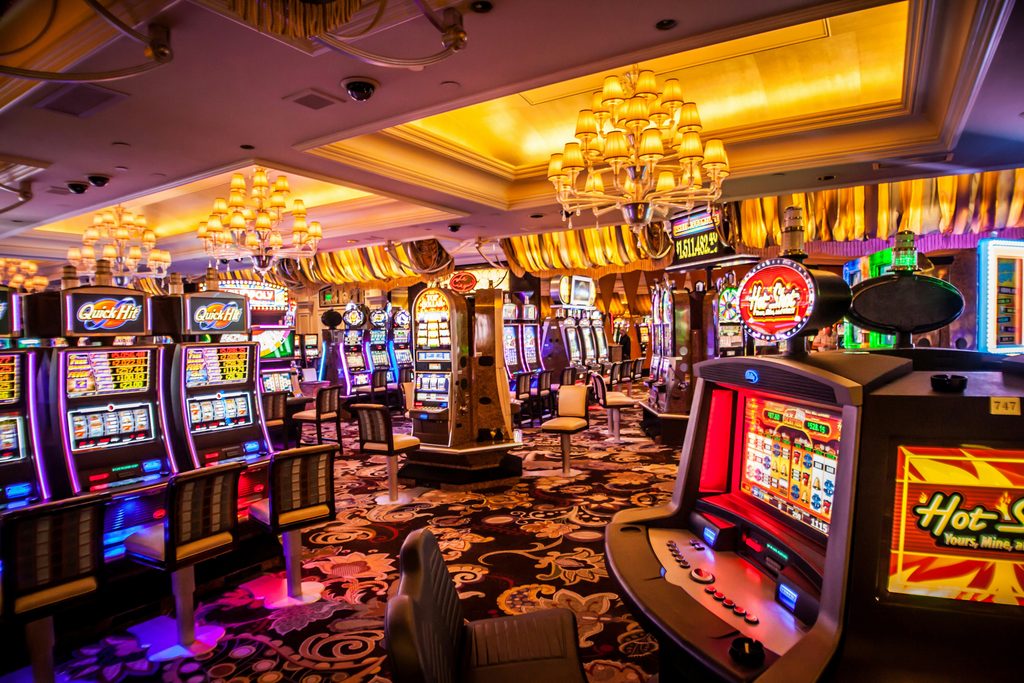
Whether it’s the opulent design or the feeling you’re walking through a maze, casinos have a certain psychological approach that event planners might find attractive in some cases. (But not every case.)
What happens in Vegas is dominated by spectacle. The trade show floors hit you with scale; the casinos hit you with the bright lights of the slot machine.
What is it about casinos and events that makes them mesh together so well in a hospitality environment? One factor, at least in Las Vegas, might come down to the host city’s infrastructure.
“It didn’t grow organically as we see in other cities that we have spots here and there, where you have to go all over the city to get a little bit of this and a little bit of that,” says Juliana Rodrigues Vieira Tkatch, an assistant professor in residence at the University of Nevada, Las Vegas William F. Harrah College of Hospitality. “In Las Vegas, it was planned to be in the strip—so you have one avenue where you can find everything.”
There’s a certain philosophy that comes with casinos. Think a lack of mirrors, a maze-like layout, a design that moves the busier games away from the quieter ones. Events have a certain design philosophy, too, one focused on high-touch interactions and a constant flow of attendees. But the area where both mesh is with an effective design, an area that IMEX emphasizes with the help of interaction designer Oliver Bailey.
“Design isn’t an activity; it’s a state of mind,” he says. “It’s a way of interacting and perceiving the world. It provides purpose and direction and places people at the center.”
With design a key talking point of IMEX this year, this piece looks at where casino design and event design might fit together, and where taking a lesson or two from a Vegas casino might prove worth a gamble.
Read on to learn where you should (and shouldn’t) be taking notes.
Common Elements of Casinos
Whether your game is blackjack, roulette, slots, or you’re looking at some of the emerging games hitting Vegas casinos, you likely think of the city as being built around a certain “type” of game. But casinos are not monolithic; two of the best-known designers, Bill Friedman and Roger Thomas, differ sharply in their approaches.
Friedman, a casino traditionalist, helped to create the low-ceiling, maze-like environments you might expect. In recent comments to Casino Reports, Friedman argued that casino design is mostly a tool to attract players.
“When it comes to casino design, it can draw gamblers in to play or push them away, but it does not hold them longer,” he told the outlet. “It is the gambling experience that does that, especially winning or losing.”
Thomas, meanwhile, favored the opposite approach when designing the hugely successful Bellagio, creating a playground-style layout with high ceilings and opulent vibes. Tkatch suggests that in an era defined by smartphones, that more luxurious, welcoming style is starting to win out.
“You can game from anywhere,” she says. “So why would you go gaming in a place where you don’t feel good?”
How IMEX Approaches Event Design
If that doesn’t sound like the IMEX experience you’re used to, that may be because IMEX has essentially focused on not overstimulating its audience, according to Bailey, a longtime interaction designer with the event.
“We are designing with a particular purpose in mind. Unlike casinos, our aim is not to keep attendees on the floor and draw as much engagement as possible. It’s quite the opposite in fact,” he says.
Ultimately the goal is to respect the time of attendees so they get what they want from the experience.
“Fundamentally, we design from a place of compassion and empathy. We don’t see our attendees or their attention as a resource to be exploited,” Bailey adds.
The fact that a functional design-focused event like IMEX America works in a place like Las Vegas speaks to the creativity of event planners, who have the room and versatility to contrast a busy environment.
“I’ve seen places being transformed by events, because you can always use and design the space very intentionally with lighting, furniture, and music that will lead people to a different mindset,” Tkatch says.
Every month, The Mixer looks at what event planners can borrow from other industries, and what they should leave behind.
Subscribe to get the next issue in your inbox.
The Common Ground between Events & Casinos
The key point where casinos and events meet comes down to how they build out their overall approaches. IMEX’s Bailey notes that a design-centric strategy often emphasizes observation.
“In basic terms, good design starts by understanding the needs of one’s stakeholders. This leads to ideation, which guides development and is then observed and iterated over time,” he says.
Casino designers are famed for this kind of audience-driven approach. Notably, Bill Friedman analyzed activity at 80 casinos before developing his signature casino framework. That mindset translates.
“What are their goals when they are looking to go to your event?” Tkatch explains. “In a trade show, it can mean business. But if it’s an entertainment event, it can mean to just relax, just disconnect.”
In many ways, casinos and conferences each come with distinct rewards systems and help their visitors meet specific goals.
“That’s why casinos are known for taking the clocks out and windows to keep people unaware of time passing by,” Tkatch says. “Events also do that, but in a different way.”
(Of course, that’s getting harder in both cases because people now have smartphones, which can instantly pull you out of an immersive moment in a second.)
Casinos vs. Conferences: Where Things Differ
But to be clear, these points of commonality do have their limits. Bailey notes a key factor where events might excel, but casinos might not.
“It is also responsible,” Bailey says of good design. “It recognizes the fragility of our ecosystems and complexity of our inner worlds. The one thing all good design has in common is the purpose, in one way or another, to make the world better and to improve lives somehow. It’s about moving in the right direction.”
This actually speaks to a project that IMEX has emphasized at recent events, an initiative to make room for neurodivergent inclusivity, understanding that people may not want to be overstimulated at an event. Some attendees, Bailey says, may reach their limits faster than others, and good event design should account for this.
“The key consideration is balance. If you are designing a feature with sensory demand, you need to offset this with a feature which provides neutrality,” he says. “It is also important to incorporate freedom of choice as much as possible, so that people can manage their own minds and bodies. However, we do offer support where support is needed and spaces to actively disengage.”
Tkatch, an advocate for what she calls universal design, says that this kind of responsible approach should be a guiding factor for any kind of overstimulating event. “This can be very stressful for any of us that do not have any special needs,” she says. “But for people with very specific needs, it’s even worse.”
To some degree, you can argue that casinos do offer ways to disengage, in favor of other Vegas entertainment. But maybe you might want something even quieter from your conference.
What Your Event Can Take from a Casino
The never-ending splendor of a casino can be an excellent way to encourage immersion, and with the right venue and target audience, Tkatch says that an event that encourages people to get lost might just work for your venue.
But if an event is more commercial or business-oriented, you could just end up making people mad: “For those events, it’s better to have clear avenues passing through good signage so people have a good app or a physical map here and there so people can really find what they need.”
In the case of IMEX, that means a network of Bluetooth beacons that make it easy to find your way around using the show app. “This greatly aids planning and wayfinding,” Bailey says.
It really comes down to understanding your audience. But even if you are running a high-energy event like a fan convention, it still helps to work some quiet in with the loud.
“Although the fans want the flash, want the attention, they, at some point they, will get overstimulated,” Tkatch notes, adding that fans have other interests in mind besides meeting pop stars. “Fans want to have community.”
Good events offer attendees choices. And though your business-to-business (B2B) conference might not directly compare to, say, The Sphere, you might be able to borrow something from the variety of Vegas.
“We channel a lot of resources into making sure engagement is manageable,” Bailey notes. “In fact, many of our immersive areas are deliberately designed to allow attendees to disengage.”
So perhaps you won’t put a slot machine at your conference any time soon, but maybe walk through a casino some time. It might teach you something about who you’re trying to reach.
Every month, The Mixer looks at what event planners can borrow from other industries, and what they should leave behind.
Subscribe to get the next issue in your inbox.
FAQ